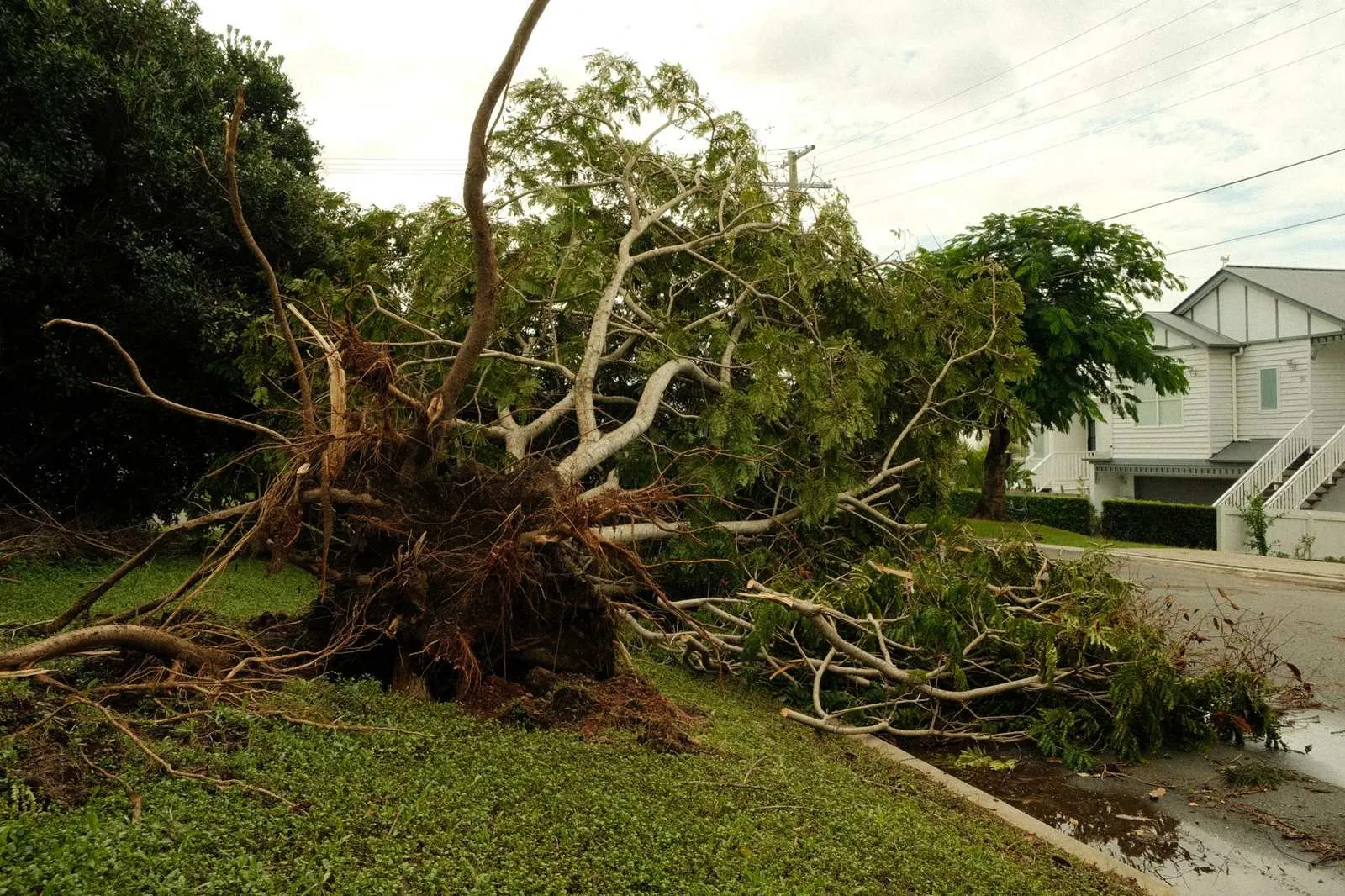
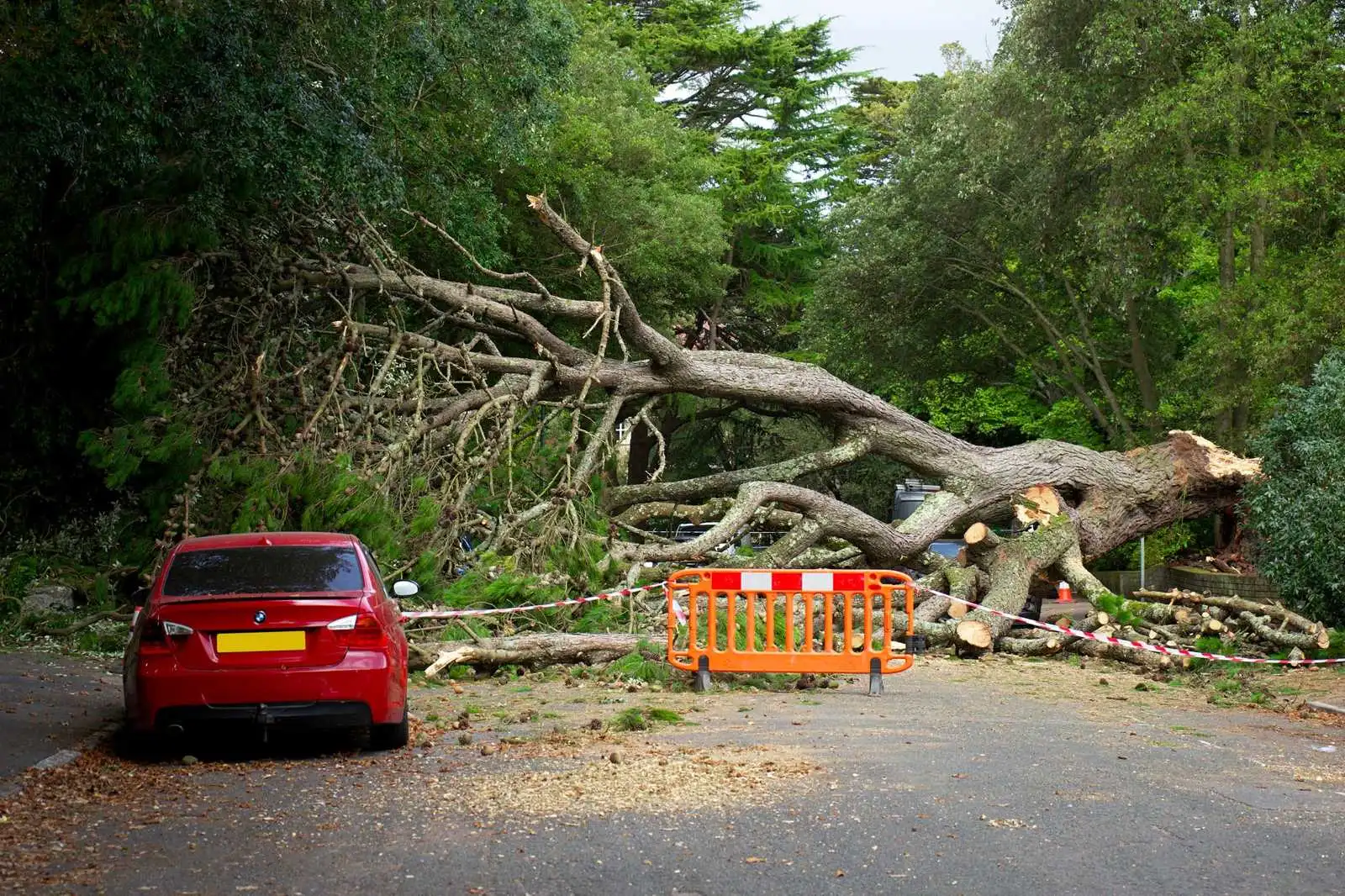
When a tree falls on your house, the first minutes feel chaotic. You're probably wondering whether it's safe to be inside and who to call. Here's what to do first if a tree fell on your house, in the order that matters most. The short version: get people clear, stay away from power lines, then call for help before you touch anything.
We handle these calls across Clark County, so this comes from what we see on the other end of the phone, along with guidance from the Washington Office of the Insurance Commissioner and Clark Public Utilities.
Step One: Get Everyone Clear
Move people and pets out from under the damaged part of the house, and away from the tree. If the tree is on a bedroom or a living room roof, leave that room and the rooms directly beneath it.
A tree on a structure is under strain, and a roof that's holding at the moment can shift. Don't go back in for belongings. If anyone is hurt or you're in immediate danger, call 911 first.
Step Two: Stay Away From Power Lines
Look before you look at anything else. If a line is down, sagging, or tangled in the tree, treat it as live. Clark Public Utilities says never to touch any power line and to stay at least 50 feet away, and to avoid anything conductive the line may be touching, such as a fence or a puddle.
Report downed lines to the utility right away. Clark Public Utilities lists 360-992-8000 and 360-992-3000 for that. If you aren't sure whether a wire is involved, assume it is, call 911, and wait. Waiting is always better than standing near a wire that might be live.
Step Three: Take Photos From a Safe Distance
Once everyone is safe, photograph and video the tree and the damage as it landed. Stay outside the fall zone and don't walk under hung-up branches to get a better angle.
The OIC advises documenting the damage with photos or video, and the pictures matter because once a crew starts clearing, that evidence changes. Get the whole tree, the point of impact, any broken windows or leaks, and the surrounding yard.
Step Four: Call Your Insurance Company
The OIC says to call your insurer or agent as soon as possible after a tree falls on your home. Ask what your policy covers and what they want you to do next.
Two points from the OIC are worth knowing. If it's safe, limit further harm, such as covering a broken window or a leaking roof, and keep every receipt for tarps and plywood. And hold off on permanent repairs until your insurer has inspected the property and you've agreed on the work. We go deeper in does homeowners insurance cover tree removal in Washington.
Step Five: Call a Tree Service That Handles Emergencies
Don't cut the tree yourself and don't hire whoever knocks on your door after a storm. A tree on a roof is often full of hidden tension. Limbs can be pinned and loaded, a lifted root plate can snap back, and what looks stable can let go without warning.
When you call, tell us what fell, what it hit, whether lines are involved, and whether anyone can still get in and out of the property. That tells us what to bring, and it lets us give you a straight answer on timing instead of a vague one. You can reach us at (360) 949-9858, or read how our emergency tree service works.
Our ISA Certified Arborist reads the tension in the tree, and the crew releases it in a planned order so the rest of the tree doesn't drop through the ceiling. When the tree is large or the access is tight, crane-assisted removal can lift sections up and out instead of putting weight on the structure.
If the Tree Is on a Car, a Fence, or Your Driveway
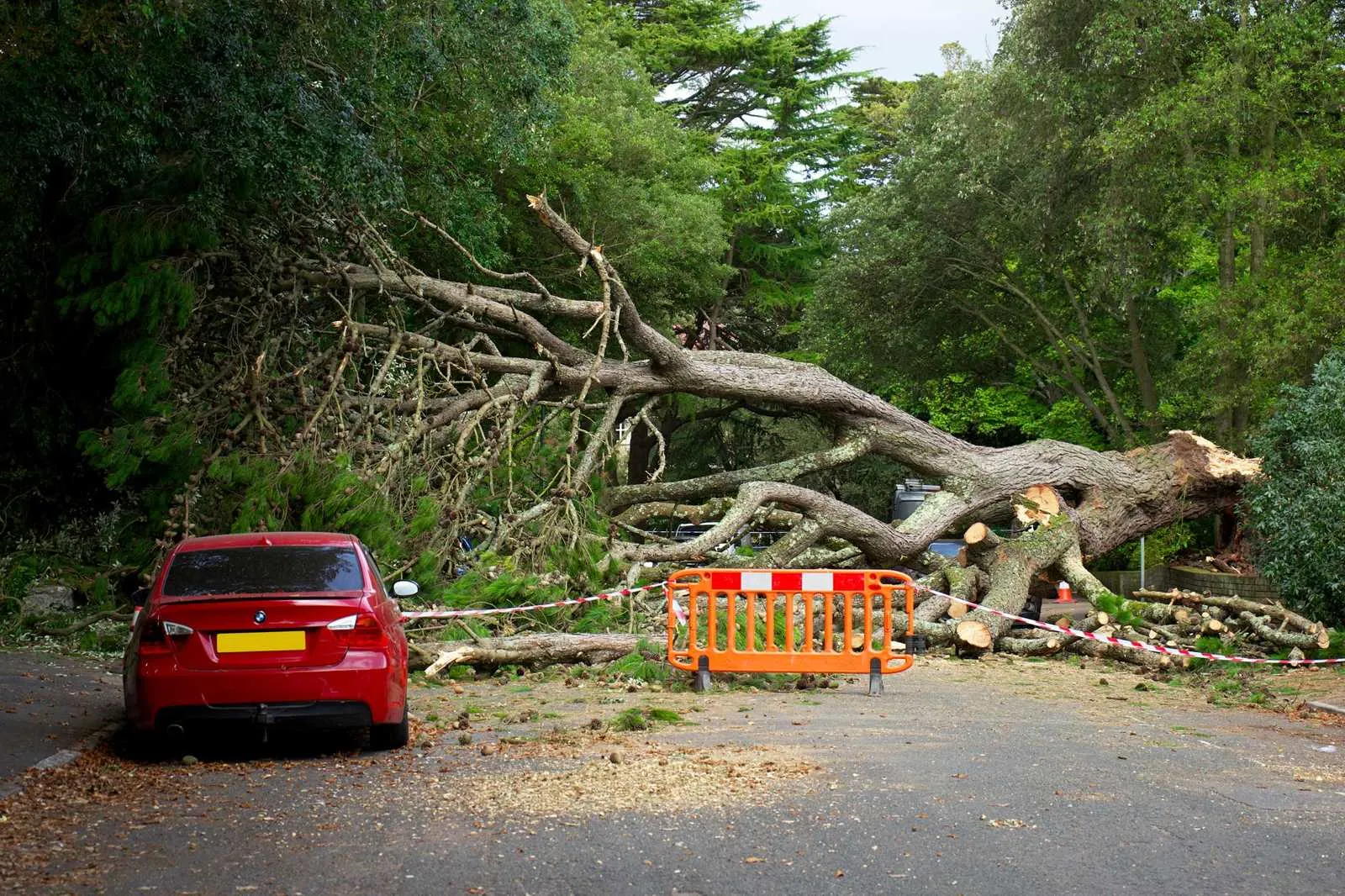
Not every fallen tree lands on the roof. A tree across the only driveway, or a limb on a fence, still deserves the same care. The first rule hasn't changed: people and pets stay clear, and any power line stays someone else's problem until the utility says otherwise.
If the tree is on a car, the damage is generally handled by the comprehensive coverage on your auto policy, according to the OIC, which also notes each policy has its own deductible. Take photos, call that insurer, and leave the car where it is until the tree has been cut away safely.
When the problem is access, tell us. A tree that blocks the only way in or out is a different kind of emergency from one resting on a bedroom, and we can often open a path first and come back to deal with the rest of the cleanup once you're no longer stranded.
What Not to Do
- Don't climb onto the roof or stand on a ladder under the tree.
- Don't try to pull, cut, or push the tree off the house yourself.
- Don't touch or move anything near a power line.
- Don't park or stand under hung-up limbs.
- Don't agree to permanent repairs before your insurer has inspected.
None of that is about being overly cautious. Trees under load hurt people who do all the right things for a minute and then step into the wrong spot. A short wait is nearly always cheaper than the alternative.
What Happens After You Call
We assess the danger, stabilize the situation, get the tree off the structure, clear your access, and haul the debris. If you're filing a claim, we can document what we found for your adjuster. If your tree came from a neighbor's yard, our guide on who pays when a neighbor's tree falls explains how that usually works.
Storms hit neighborhoods in clusters, so response depends on how widespread the damage is. We serve emergency calls in places like Hazel Dell, WA, Salmon Creek, WA, and Camas, WA, and we'll tell you honestly how soon we can be there.
Common Questions About a Tree Falling on a House
Is It Safe to Stay in the House After a Tree Falls on It?
Not in the damaged area. Move everyone away from the affected rooms and the rooms below them. If you're unsure whether the structure is sound, leave and call 911 or a professional to assess it before anyone goes back in.
Who Do I Call First When a Tree Falls on My House?
Call 911 if anyone is hurt or a power line is involved, and your utility to report a downed line. Then call your insurer, and then a tree service to remove the tree safely.
Should I Take Photos Before the Tree Is Removed?
Yes, from a safe distance. The OIC advises documenting the damage with photos or video, and the tree's position is the best record of what happened.
Can I Remove the Tree Myself?
We wouldn't. A tree on a structure holds stored tension, and one wrong cut can move the whole thing. This is one of the more dangerous jobs in tree work, and it isn't a do-it-yourself project.
If a tree is down at your place, contact Priority Tree Service and we'll walk you through the next steps.